
Exploring Native American Heritage in St. Pete-Clearwater
For thousands of years, Native American communities—including the Tocobaga people and those associated with the Weeden Island culture—lived in what is now St. Pete-Clearwater.

View paintings at the James Museum depicting perspectives of Indigenous peoples in the American West.
When the first Spanish conquerors arrived in the 1500s in the area that is now Florida, life was disrupted for Native American peoples. The Indigenous communities suffered greatly from violence, disease and displacement. Today, visitors can learn more about the lives of Native Americans in the region and in the U.S. by visiting museums, parks and preserves to see artwork as well as historical and cultural artifacts. Here are four ways to learn about the fascinating history of Native Americans in St. Pete-Clearwater.
-
Safety Harbor Museum and Cultural Center
Learn about the Safety Harbor Museum and Cultural CenterBegin your deep dive into St. Pete-Clearwater’s Native American history with a visit to the Safety Harbor Museum and Cultural Center. The small, not-for-profit museum in Safety Harbor is a good place to get an introduction to the Tocobaga. View shell tools, pottery shards and handcrafted beads, and explore dioramas that tell the stories of the people, who built a complex society centered around small villages, and who thrived on food they hunted and gathered.
Given that the museum covers 12,000 years of history, the exhibits don’t stop with stories about the local Indigenous people. You can also learn more about Spanish explorers and see historical photographs and memorabilia from Safety Harbor around the turn of the 20th century.
-
Native American Mounds
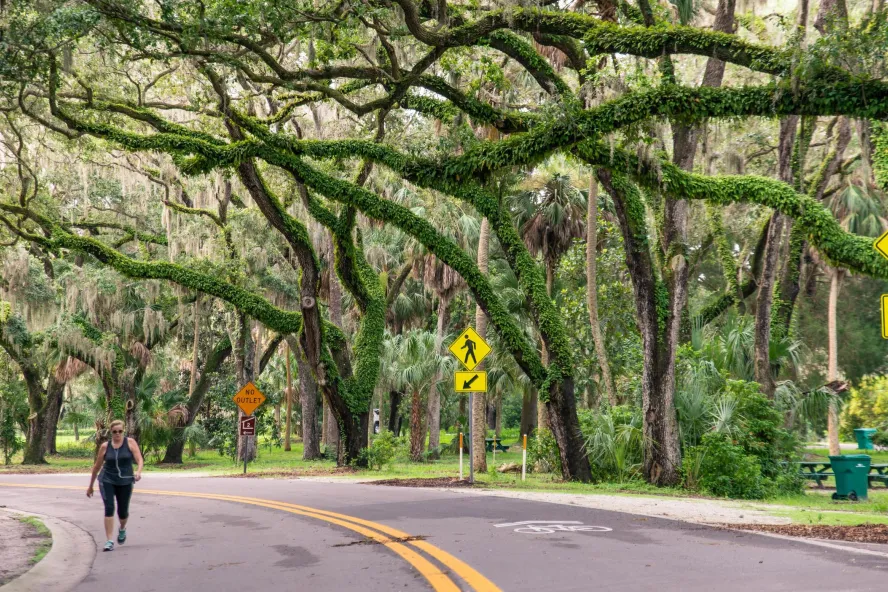 Learn about Philippe Park
Native American mounds are visible evidence of the presence of Indigenous peoples. Some supported ceremonial buildings or leaders’ homes, while others served as sacred burial grounds.
Head to Safety Harbor’s Philippe Park to explore the largest remaining mound in the Tampa Bay region. Part of a settlement believed to have been the Tocobaga capital, the park’s Tocobaga Temple Mound stands approximately 20 feet high and is believed to have been used for ceremonies. Visit this National Historic Landmark to read about its history on informational signs and enjoy expansive views of Tampa Bay.
Other Native American mound sites are found throughout St. Pete-Clearwater. Stop by Indian Mound Park (often called the Indian Burial Mounds), tucked into a residential neighborhood near the southern tip of St. Pete. Or take a tour of the Anderson-Narváez Mound and its small museum, located adjacent to Jungle Prada Park, with Discover Florida Tours.
-
Weedon Island Preserve
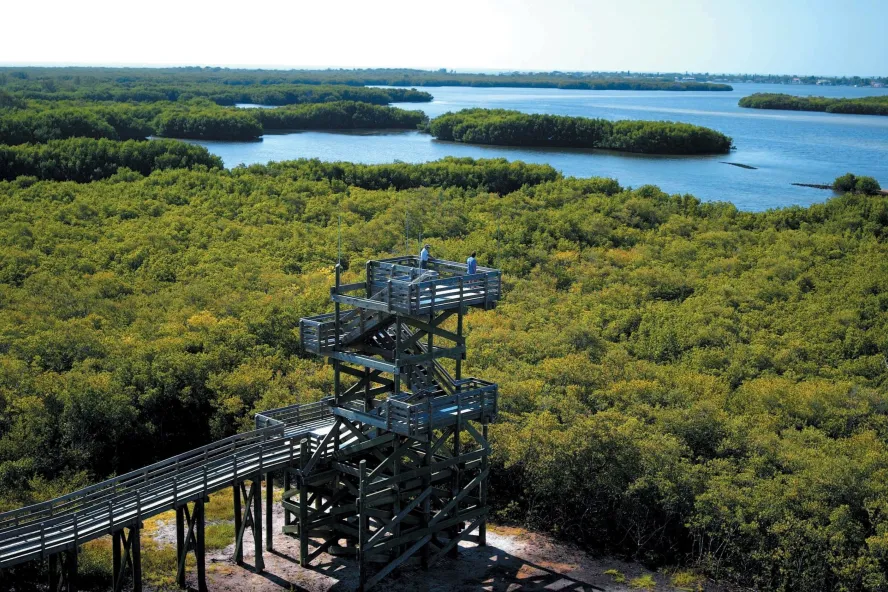 Weedon Island Preserve Cultural & Natural History Center
Weedon Island Preserve is a 3,190-acre preserve located on Tampa Bay.
Learn about Weedon Island PreserveIn addition to the Tocobaga people, the St. Pete-Clearwater area was once home to the Weeden Island culture. As you might expect based on the name, this tribe lived in and around what is now Weedon Island Preserve in north St. Petersburg.
The preserve’s three-story Cultural and Natural History Center features 6,000 square feet of interactive exhibits exploring the area’s natural, cultural and archaeological history. Discover how Indigenous peoples and the environment shaped one another through exhibits that take you through mangrove swamps, underwater and back in time. Admission to the exhibit gallery is free and open to the public.
Beyond the cultural center, visitors can look for shorebirds along the boardwalk and climb the observation tower.
-
The James Museum of Western & Wildlife Art
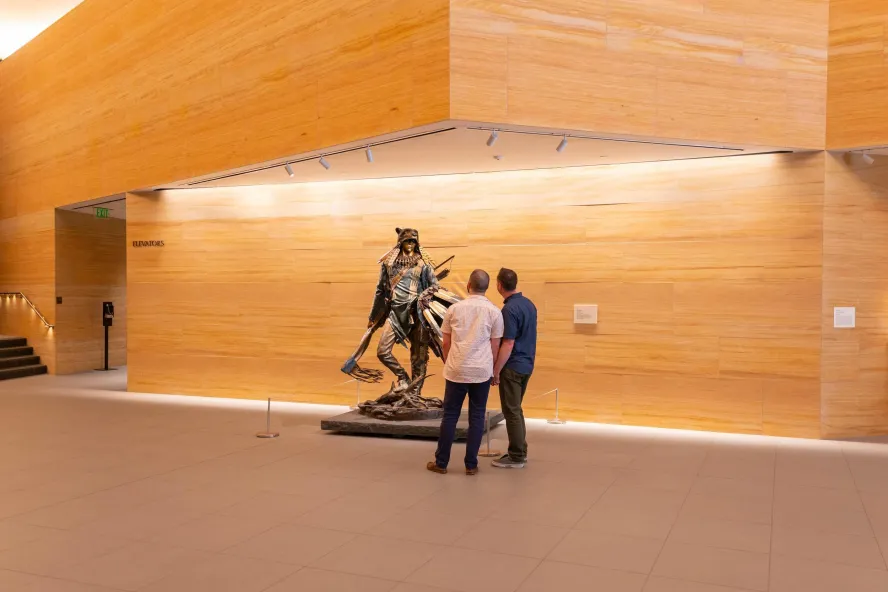
Discover stunning bronze sculptures that bring the spirit of the American West to life at The James Museum in St. Pete.
Learn about The James MuseumBroaden your knowledge of Native American heritage with a visit to The James Museum of Western & Wildlife Art, in St. Pete's Central Arts District. The expansive, one-of-a-kind museum is home to eight galleries filled with hundreds of paintings, sculptures, jewelry and other works of art, mostly depicting the people and places of the American West. In the Native Artists Gallery, visitors can see contemporary Indigenous art from the 1950s to today, representing diverse regions of North America. Guest speakers, special events and other programming round out the museum’s offerings.


