Details on the Grand Prix Course
St. Pete’s street course offers spectators up-close views as cars roar past just feet away and drivers jockey for the lead at speeds of more than 100 mph, braking hard for the tight turns and flying through the straight sections. The temporary track is narrow (26 feet at its narrowest) but the course’s long straight sections (the front straight is 2,350 feet) and big braking zones allow drivers an average of almost 185 thrilling passes per race.
Passing opportunities involve risks. The narrow, open-wheel racecars’ design with wheels sticking out means that even the slightest brush with another car or the temporary concrete walls lining the course can be disastrous. The drivers’ skill and willingness to take chances grip spectators.
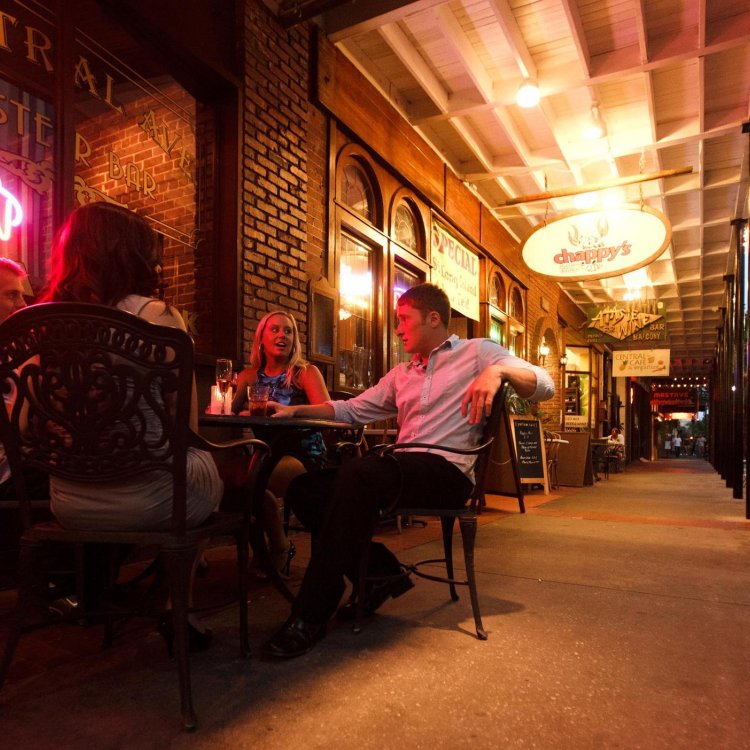
St. Pete’s nearby restaurants, bars and shops lend a festive and fun atmosphere to the event, which circles Pioneer Park, the Duke Energy Center for the Arts - Mahaffey Theater and the Dalí Museum. It’s a far cry from other racetracks that are often in remote locations and offer fewer (and less luxurious) food and entertainment options.
The great racing, the beautiful setting on the St. Petersburg waterfront and the many amenities attract a stream of well-heeled fans, race drivers and teams to Florida’s only IndyCar race. Luxury yachts fill downtown marinas, and hotels and bars are busy.
Food & Drink at the Event
Pedestrian bridges carry spectators into the mostly shady interior of the track, Pioneer Park, where food and beverages are available from a variety of vendors. In between practice sessions or races, a track crossing is opened, allowing people to cross the track at ground level.
Of course, dining in St. Pete is an experience you won't want to miss, as the city is full of great restaurants and bars where you can grab a bite before or after the racing excitement.
The Engineering Feat to Get St. Petersburg Ready for the Race
Staging the St. Pete Grand Prix requires something of an engineering marvel. Transforming public streets into a track on which cars will race safely at an average of about 100 mph requires 8,000 feet of steel-reinforced concrete blocks, totaling 20 million pounds of concrete, being placed along the track; 25,000 feet of chain-link spectator fencing; and 18,000 feet of panel fencing securing the steel-reinforced concrete barriers. Other safety measures include trackside walls of more than 12,000 tires wrapped with 1,500 feet of 40-inch-wide, half-inch-thick reinforced rubber.
Despite the enormity of the task, the 300-person track-build team will complete installation and teardown in 27 days. Track construction will take 18 days; teardown and removal will be completed within one week.
About Our Writer:
Terry Galvin's ties to St. Pete tourism run deep and decades-long. His grandfather was a photographer who would roam the streets of St. Pete with a big camera around his neck, taking black-and-white photos of tourists, printing them overnight with “St. Petersburg, Florida” in the margin, and delivering them next morning to their hotels. His grandparents also managed the Alexander Hotel in the 500 block of Central Avenue in the 1960s. Terry grew up on the water in Largo, where he learned to love sailing. He has worked as a writer, designer and editor for the Virgin Islands Daily News and the Sarasota Herald-Tribune. A resident of Sarasota with his wife and son, Terry enjoys sailing, rowing and bicycling.
Sponsored Content
Your Quick Guide to Planning a Getaway in St. Pete
Planning a long weekend or extended stay? Use these guides to build your perfect St. Pete itinerary.